Saturday, September 26, 2026
Trivia of the Day
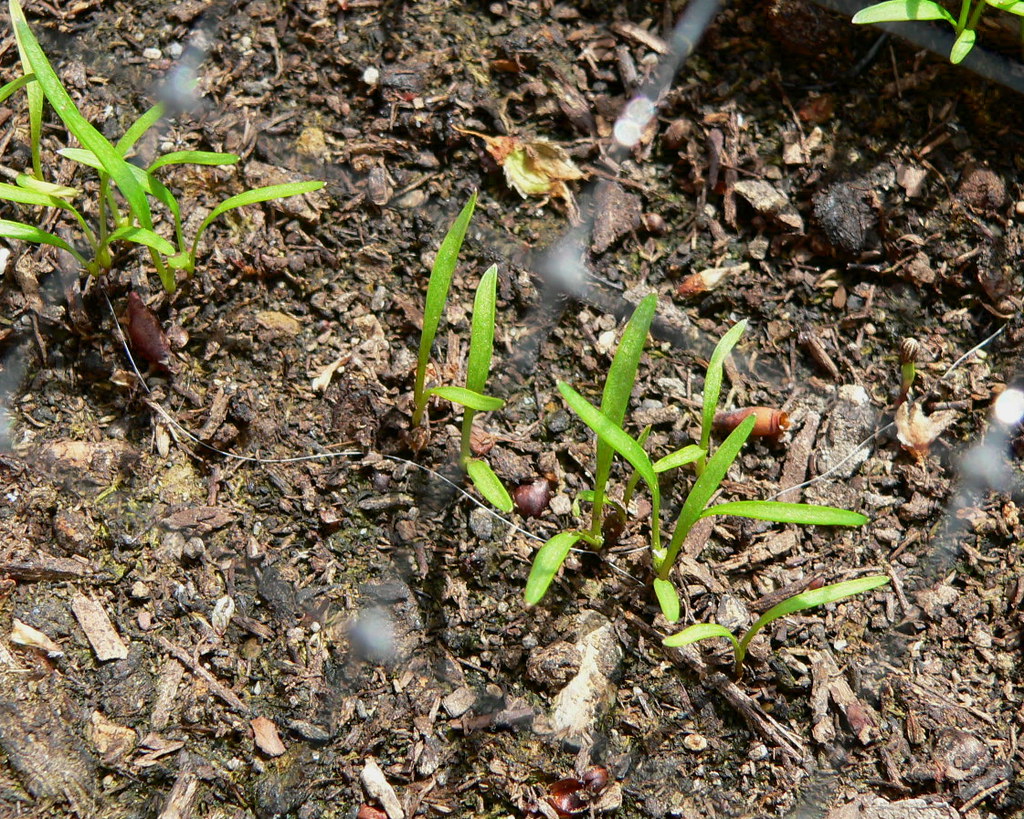
What vegetable was originally purple before Dutch farmers bred the orange variety?
- carrots
- beets
- potatoes
- turnips
Answer: carrots — Carrots were predominantly purple, yellow, and white for most of history until Dutch growers in the 17th century selectively bred orange carrots, possibly to honor William of Orange. The orange pigment—beta-carotene—also made the new variety far richer in vitamin A than its ancient ancestors, turning a decorative breeding project into a lasting nutritional upgrade. Today almost every carrot in the supermarket descends from those Dutch experiments, and the older colors survive only in heirloom seed catalogs.
The ancient rainbow underground
Carrots entered cultivation roughly 5,000 years ago in the region that is now Afghanistan, and for most of their domesticated history they were anything but orange. Purple carrots dominated early fields, their deep anthocyanin pigments ranging from near-black to lavender; yellow and white varieties appeared as farmers selected for different flavor profiles and storage qualities. The wild ancestor, Daucus carota, produced a thin, pale, bitter root that required centuries of selective breeding to yield the sweet, thick taproots we recognize today. By the time carrots reached the Mediterranean in classical antiquity, Greek physicians praised their medicinal properties but made no mention of orange specimens—because none yet existed. The vegetable spread across Europe during the Middle Ages as a hardy, versatile crop that thrived in cool climates, and recipe books from the 1300s and 1400s describe purple, yellow and white carrots appearing in stews, pies and medicinal preparations. Orange remained absent from the spectrum, a botanical possibility waiting for the right political moment to arrive.
The Dutch breeding revolution
The orange carrot emerged in the Netherlands during the late 1500s and early 1600s, a period when Dutch growers led Europe in horticultural innovation and seed improvement. The House of Orange-Nassau ruled the Dutch Republic, and orange served as the dynasty's symbolic color, worn by soldiers, flown on flags and woven into the national identity during the Eighty Years' War for independence from Spain. Whether the breeding program deliberately honored William of Orange or simply capitalized on a popular market preference remains debated, but the timing and geography leave little doubt that politics and botany intertwined. Dutch growers crossbred yellow and white varieties to concentrate carotenoid pigments, stabilizing a bright orange mutant that had likely appeared sporadically for generations without being preserved. The new cultivar stored well, tasted sweeter than the old purple types—anthocyanins can add bitterness—and its color signaled high beta-carotene content, though 17th-century farmers had no concept of vitamins. By the 1700s the orange carrot had spread to France, England and the American colonies, crowding out its colorful ancestors in market gardens and farm plots. Seed catalogs from the 1800s listed orange as the default, with purple and yellow relegated to curiosities or livestock fodder.
The chemistry of color and nutrition
Orange carrots owe their hue to beta-carotene, a pigment the human body converts into vitamin A, essential for vision, immune function and cell growth. Purple carrots contain anthocyanins but relatively little beta-carotene, making them nutritionally distinct despite their visual appeal. A single cup of raw orange carrot provides over 400 percent of the daily recommended vitamin A intake, a concentration so high that excessive consumption can temporarily tint the skin yellow—a harmless condition called carotenemia observed in toddlers and juicing enthusiasts. The Dutch breeders could not have known they were engineering a nutritional powerhouse, yet their selection for sweetness and color inadvertently amplified the crop's health benefits. In the 20th century, plant scientists mapped the genetic mutations responsible for carotenoid accumulation, confirming that a handful of genes control the shift from white or purple to orange. Modern molecular breeding has pushed carotenoid levels even higher, with some experimental hybrids approaching twice the beta-carotene of standard supermarket carrots. Meanwhile, purple and yellow heirlooms have enjoyed a niche resurgence among chefs and gardeners drawn to their historical authenticity and complex flavors, proving that the old spectrum never truly vanished—it simply waited in seed banks for tastes to turn.
Why a vegetable's color still matters
The orange carrot's triumph reshaped global nutrition in ways few single breeding decisions have matched. Vitamin A deficiency remains a leading cause of preventable blindness in developing countries, and carrots—cheap, hardy and easy to grow—offer one of the most accessible dietary sources of the nutrient. International agricultural programs distribute improved carrot varieties to subsistence farmers in Asia and Africa, building on the genetic foundation Dutch growers laid four centuries ago. The story also illustrates how cultural and political forces can drive biological change: a dynastic color preference redirected the evolutionary path of a food crop, and that redirection stuck because it aligned with human taste, storage needs and, unknowingly, nutritional science. Today the word "carrot" conjures orange in nearly every language, a testament to how completely the Dutch innovation displaced its predecessors. Yet the survival of purple, yellow and white heirlooms reminds us that biodiversity is not a ladder—just because one variety dominates does not mean the others lacked value. The carrot's full color wheel remains encoded in seed collections worldwide, a living library waiting for the next shift in agricultural priorities, culinary fashion or environmental conditions. In an era of monoculture and supply-chain fragility, that library may prove as important as the orange carrot itself once did.
What most people get wrong
Many people assume carrots have always been orange and that purple or yellow varieties are modern novelties bred by specialty farms. In fact, the reverse is true: purple, yellow and white carrots dominated for thousands of years, and orange became standard only after Dutch growers stabilized the trait in the 1600s.
Sources & further reading
Word of the Day
phlegmatic adjective · fleg-MAT-ik
Having a calm, stoic, unemotional temperament; not easily excited or upset. The term descends from medieval humorism, the belief that bodily fluids (humors) governed personality, with phlegm associated with sluggishness and apathy—though modern use has softened to mean steady composure rather than dullness.
“The phlegmatic pilot guided the crippled aircraft through the storm with the same measured tone he used to order coffee. In a different sense, the committee's phlegmatic response to the scandal suggested either supreme confidence or troubling indifference.”
Sponsored
Get paid for your opinion
You clearly like a good question — these pay you to answer them. Up to $8 a survey.
Joke of the Day
Why did the carrot historian refuse to eat at the Dutch embassy dinner?
Too much revisionist orange propaganda.
This Day in History
1983 — On September 26, 1983, Soviet Air Defence Forces officer Stanislav Petrov was on duty at the Serpukhov-15 bunker near Moscow when early-warning satellites reported that the United States had launched five ballistic missiles at the Soviet Union. Protocol demanded he alert his superiors and set in motion a retaliatory nuclear strike, but Petrov judged the alarm to be a false positive—reasoning that an actual first strike would involve hundreds of missiles, not five—and reported a system malfunction instead. He was correct: sunlight reflecting off high-altitude clouds had fooled the satellite sensors. Petrov's decision to trust analysis over automated alerts is widely credited with preventing an accidental nuclear war, though he faced official censure and left the military the following year. His story remained obscure until the late 1990s, when journalists uncovered the incident and honored him as "the man who saved the world," a title he deflected with characteristic modesty until his death in 2017.
Sponsored
Find paid surveys near you
Match with survey and sweeps opportunities that pay for a few minutes of your time.
Enjoyed this issue?
Get the next one free, every morning.
More from Words IQ


