Monday, September 28, 2026
Trivia of the Day
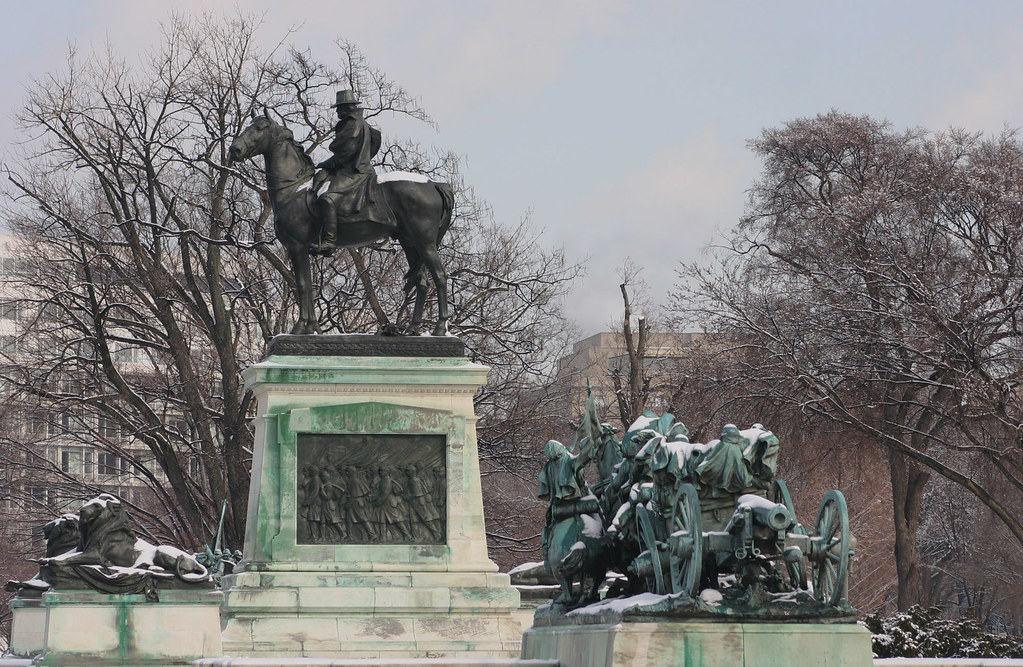
Which famous government building was used as a military hospital, bakery, and stable during the Civil War?
- The United States Capitol building
- Independence Hall
- The White House
- Ford's Theatre
Answer: The United States Capitol building — During the height of the war, over 2,000 wounded soldiers occupied the Rotunda, Senate chamber, and hallways simultaneously, while cavalry horses were stabled in the basement corridors. The building's marble floors bore permanent stains from the bloodshed, and the smell of gangrene and infection lingered in the halls for months after the makeshift hospital closed in 1865. Despite the damage and desecration, Congress never relocated and continued legislating in the few rooms that remained accessible, a decision that came to symbolize Union determination to preserve the nation and its institutions even as the war threatened to destroy both.
From Marble Halls to Military Wards
Within weeks of Fort Sumter's bombardment in April 1861, wounded Union soldiers began streaming into Washington by the hundreds, overwhelming the city's handful of hospitals and forcing military authorities to commandeer every available building. By July 1861, following the Union rout at Bull Run, the Capitol became a makeshift hospital with cots lining the Rotunda, Senate chamber, and even the ornate halls beneath the still-unfinished dome. Over 2,000 men at a time lay on straw pallets atop the marble floors, attended by army surgeons who amputated limbs in committee rooms and burned uniforms in the courtyards. The basement corridors housed cavalry stables, where hundreds of horses were quartered to support the defense of Washington, their droppings and urine seeping into the stonework. Meanwhile, the Capitol's ovens were converted into a massive military bakery, producing thousands of loaves daily to feed the growing garrison.
Congress in Session Among the Wounded
Remarkably, Congress never adjourned or relocated despite the chaos. Legislators picked their way through blood-stained hallways to reach the House chamber, one of the few rooms kept clear for debate, where the smell of gangrene and chloroform drifted through open windows. Senators held committee hearings in closets and anterooms while surgeons sawed through bone in the adjacent library. The peculiar arrangement forced lawmakers to confront the war's human cost in visceral terms—members stepping over amputated limbs on their way to vote, overhearing the screams of men under the knife as they debated appropriations bills. By late 1862, purpose-built military hospitals finally relieved the pressure, and the last patients were evacuated in 1863, though the cavalry stable remained in the basement until 1865. The decision to continue governing in a building that doubled as a slaughterhouse became a potent symbol of Union resolve, even as critics accused Congress of callousness for legislating amid such suffering.
The Permanent Scars Left Behind
When the war ended, the Capitol bore physical reminders that would never fully disappear. Bloodstains had soaked deep into the marble floors of the Rotunda, requiring sections to be replaced or sanded down repeatedly over subsequent decades. The basement walls retained dark streaks from horse waste, and the smell persisted through multiple scrubbings and whitewashings. Workers discovered discarded surgical instruments, broken crutches, and even a few skeletal remains during renovations in the 1870s. The building's art and statuary had been hastily removed at the war's outset—some pieces stored in cellars, others crated and shipped to New York—but not all returned, and several priceless paintings bore water damage or mold from improper storage. The experience also changed how the building was managed: post-war Capitols added dedicated medical facilities, fireproofing, and sanitation systems, lessons learned from the grim improvisation of 1861.
A Monument That Refused to Yield
The Capitol's wartime repurposing occupies an ambiguous place in national memory—a story of pragmatic sacrifice that also underscores the desperation of the Union cause in its darkest hours. That Congress never fled, even symbolically, reinforced Lincoln's insistence that the rebellion was temporary and the government unbroken, a message amplified when the Capitol dome was completed in 1863 despite the war raging on. Today, tour guides point out faint discolorations in the stonework, though most visitors pass them unknowingly, unaware they are walking over floors that once held dying men and cavalry mounts. The building's survival as both hospital and seat of government remains a peculiar testament to the Union's determination to preserve its institutions at any cost—even if that cost was measured in blood, desecration, and the transformation of a temple of democracy into a charnel house for four long years.
What most people get wrong
Many assume the Capitol was simply evacuated or closed during the Civil War to protect it from damage or Confederate attack. In reality, it was never abandoned—Congress continued meeting in its chambers while wounded soldiers occupied the rest of the building, creating a jarring juxtaposition that defined Washington's wartime reality.
Word of the Day
anfractuous adjective · an-FRAK-choo-us
Full of twists and turns; winding and intricate. From Latin anfractus, a bending or winding, itself from ambi- (around) and frangere (to break)—the word originally described the coiled intestines of sacrificial animals before Roman augurs applied it to any sinuous path or labyrinthine argument.
“The anfractuous route through the Appalachian hollows required constant attention, each hairpin turn revealing another valley folded into the ridges. Her anfractuous reasoning left the jury baffled, a argument that doubled back on itself so many times they lost track of the original premise.”
Sponsored
Get paid for your opinion
You clearly like a good question — these pay you to answer them. Up to $8 a survey.
Joke of the Day
Why did the Capitol tour guide refuse to work the overnight shift during the Civil War?
Too much at stake.
This Day in History
1066 — William the Conqueror set sail from Normandy with an invasion fleet of perhaps 700 ships, crossing the English Channel to claim the English throne after the death of Edward the Confessor. His landing at Pevensey Bay on September 28 went unopposed, as King Harold Godwinson was still in the north recovering from his victory over Norwegian invaders at Stamford Bridge three days earlier. The delay proved fatal—Harold force-marched his exhausted army south and met William at Hastings on October 14, where an arrow to the eye ended Saxon England. The Norman Conquest reshaped the English language, legal system, architecture, and aristocracy for centuries, making this beach landing one of the most consequential in European history.
Sponsored
Find paid surveys near you
Match with survey and sweeps opportunities that pay for a few minutes of your time.
Enjoyed this issue?
Get the next one free, every morning.
More from Words IQ


