Thursday, September 10, 2026
Trivia of the Day
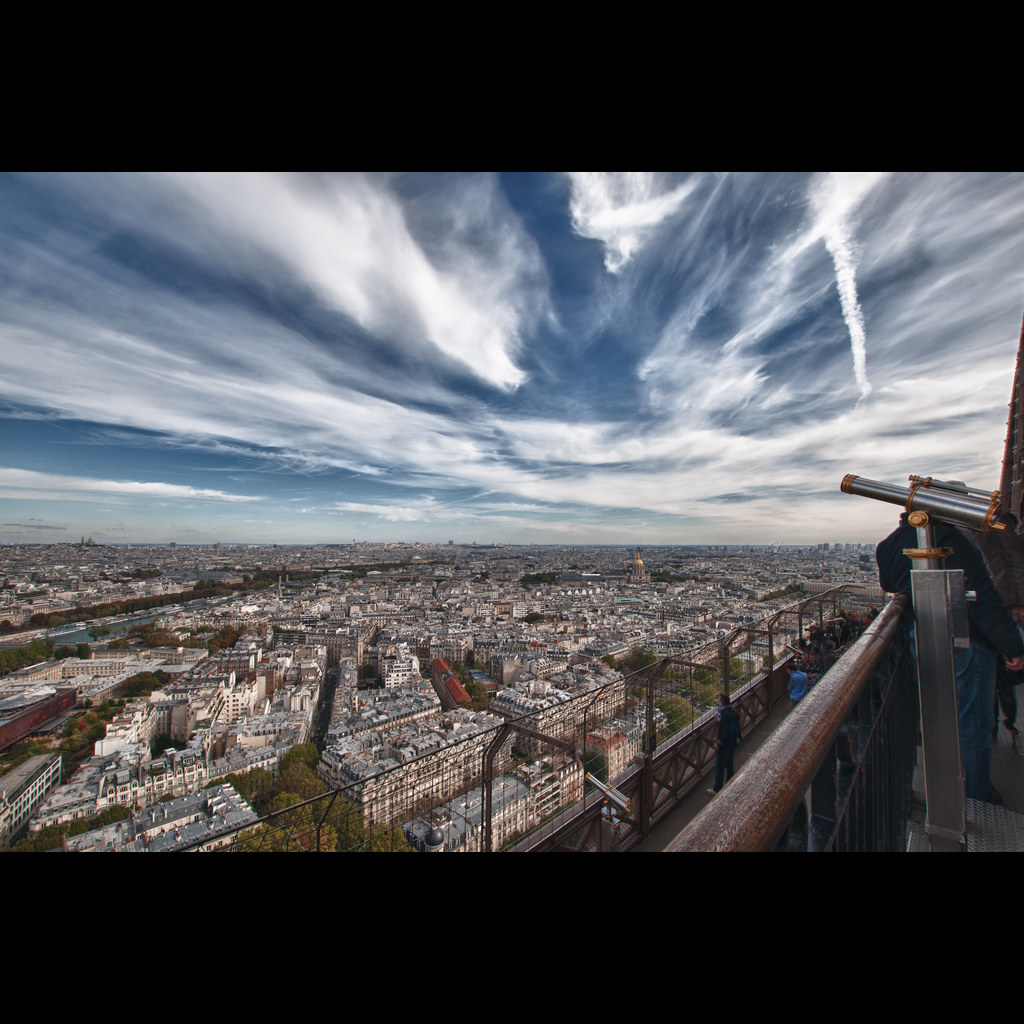
Which Paris landmark was originally intended to stand for only 20 years before being dismantled?
- Arc de Triomphe
- Eiffel Tower
- Sacré-Cœur Basilica
- Pont Alexandre III
Answer: Eiffel Tower — The Eiffel Tower was saved from demolition in 1909 because it proved useful as a radiotelegraph station for the French military. What began as a temporary exhibition centerpiece became permanent infrastructure when military engineers discovered its height made it the perfect antenna for long-distance wireless communication. By the time its original permit expired, the tower had intercepted German radio signals and coordinated French troop movements—making it too strategically valuable to dismantle, and today it still bristles with transmission equipment serving Paris broadcasters.
The Temporary Monument
Gustave Eiffel's iron lattice tower opened on March 31, 1889, as the entrance arch to the Exposition Universelle celebrating the French Revolution's centennial. The construction permit explicitly stated the structure would stand for twenty years, after which the City of Paris could dismantle it and sell the 7,300 tons of puddled iron for scrap. Eiffel had invested 1.5 million francs of his own money into the 300-meter tower, and his contract granted him operating revenues for two decades to recoup costs—after which the structure would revert to the city, which planned demolition. Critics called it an eyesore, a metal skeleton disfiguring the Parisian skyline, and many assumed the temporary attraction would vanish by 1909 as promised. The tower's survival was never guaranteed by popular affection; Parisians remained divided, and the permit's expiration loomed like a demolition countdown.
Eiffel himself recognized that sentiment alone wouldn't save his tower, so he spent the 1890s searching for practical uses that would justify its existence beyond the exposition. He installed a meteorological station at the summit in 1890 and funded atmospheric research, turning the tower into a scientific laboratory. He built a wind tunnel at its base and invited physicists to conduct experiments in the high-altitude platform, hoping to prove the structure's value to French science. By 1898, Eiffel had convinced the War Ministry to let him string a wireless antenna from the top, and engineer Gustave Ferrié began conducting radiotelegraph experiments that could transmit signals up to 400 kilometers. The tower's height gave it a range no ground-level station could match, and by 1903 Ferrié had established permanent military radio equipment at the summit, coordinating time signals and weather reports across France.
The Radio Reprieve
When 1909 arrived and the demolition permit expired, the French military intervened to save the tower because its radiotelegraph station had become indispensable. Ferrié's equipment could communicate with ships in the Atlantic and relay messages to fortresses along the German border, capabilities the army refused to surrender. The tower had intercepted German wireless transmissions during diplomatic tensions, giving French intelligence a surveillance advantage they considered vital to national security. In 1910, the military formally leased the tower for radio operations, and the city's demolition plans evaporated—not because Parisians had fallen in love with the structure, but because generals deemed it a strategic asset. The same critics who had called for its removal now grudgingly accepted that the iron tower served the republic in ways its architect had never intended when he built an exposition entrance.
During World War I, the tower's radio proved its worth decisively when Ferrié's operators intercepted German military communications, including messages that helped French forces win the First Battle of the Marne in September 1914. The station jammed German radio signals, disrupted enemy coordination, and transmitted orders to French commanders across the Western Front. In 1916, the tower's receivers picked up a coded message that led to the arrest of dancer Mata Hari, accused of espionage for Germany. By the armistice in 1918, the Eiffel Tower had become synonymous with French military communications, its wartime service transforming public opinion—what had been a temporary exhibition novelty was now a monument to technological progress and national defense, too embedded in France's infrastructure to ever dismantle.
The Antenna Farm
After the war, the Eiffel Tower's role expanded as radio broadcasting emerged, and by 1921 the first public radio programs transmitted from its summit, reaching listeners across the Paris basin. The tower's height made it ideal for the new medium, and commercial broadcasters leased space alongside military operators, turning the structure into a transmission hub. In 1925, an illuminated Citroën advertisement covered one face of the tower with 250,000 lightbulbs, funded by the automaker's lease payments—commercialization that horrified purists but generated revenue that funded maintenance. By 1930, the tower hosted a dozen antennas, and its silhouette became inseparable from the new age of wireless communication. Television transmitters joined radio in the 1950s, and today the tower carries signals for French broadcasters, digital radio, and mobile networks—its original purpose as an exhibition entrance utterly forgotten, its survival justified by a use Eiffel had improvised to rescue his investment.
The tower's near-demolition illustrates how infrastructure often finds purposes its creators never imagined, and how survival depends on adaptability rather than original intent. Eiffel built an entrance arch for a six-month fair, but he retrofitted it into a laboratory and radio mast to extend its life beyond the permit. The military saved it not for beauty but for strategic advantage, and broadcasters kept it standing because it solved a technical problem—height equals range. Had Eiffel refused to let scientists and engineers colonize his monument, the iron tower would have been dismantled in 1909 and melted into bridge girders or railway tracks, remembered only in photographs as a temporary curiosity from the 1889 exposition. Instead, it became Paris's most recognizable landmark, proof that usefulness, not aesthetics, often determines which monuments endure.
What most people get wrong
Most people assume Parisians loved the Eiffel Tower from the start and that affection saved it from demolition, but the structure was widely criticized as ugly well into the 20th century—its survival was a military decision based on radio technology, not a public embrace of its design.
Word of the Day
corybantic adjective · kor-ih-BAN-tik
Wild, frantic, or ecstatic in manner, especially in dance or revelry. The term descends from the Corybantes, the wild dancing priests of the ancient Phrygian goddess Cybele, whose rituals involved drumming, clashing cymbals, and whirling dances believed to induce divine frenzy. In modern use, it describes any unrestrained, almost possessed enthusiasm.
“The festival crowd's corybantic energy overwhelmed the security staff, who had expected polite applause, not a stampede toward the stage. His corybantic enthusiasm for the project—late-night emails, unsolicited revisions, manic conference calls—exhausted his collaborators, who preferred measured progress to his feverish pace.”
Sponsored
Find paid surveys near you
Match with survey and sweeps opportunities that pay for a few minutes of your time.
Joke of the Day
Why did the radio engineer refuse to demolish the Eiffel Tower in 1909?
He didn't want to lose reception with the French military—besides, you can't exactly relocate 7,300 tons of iron to a better signal zone.
This Day in History
1960 — On September 10, 1960, the Organization of the Petroleum Exporting Countries (OPEC) was founded in Baghdad by five oil-producing nations: Iran, Iraq, Kuwait, Saudi Arabia, and Venezuela. The alliance formed in response to Western oil companies unilaterally cutting crude prices, slashing revenues for governments dependent on petroleum exports. OPEC's creation marked the beginning of producer nations asserting control over their own resources, a shift that would culminate in the 1973 oil embargo and reshape global energy politics for decades. Today, OPEC's decisions on production quotas still move world oil markets, though its influence has waned with the rise of U.S. shale production and renewable energy.
Sponsored
Free samples & coupons this week
Grab freebies and printable coupons from brands you already buy.
Enjoyed this issue?
Get the next one free, every morning.
More from Words IQ


