Wednesday, October 28, 2026
ohio scanned a grocery item in 1974 and changed commerce—what?
By Corey Lewis · Editorial standards
Trivia of the Day
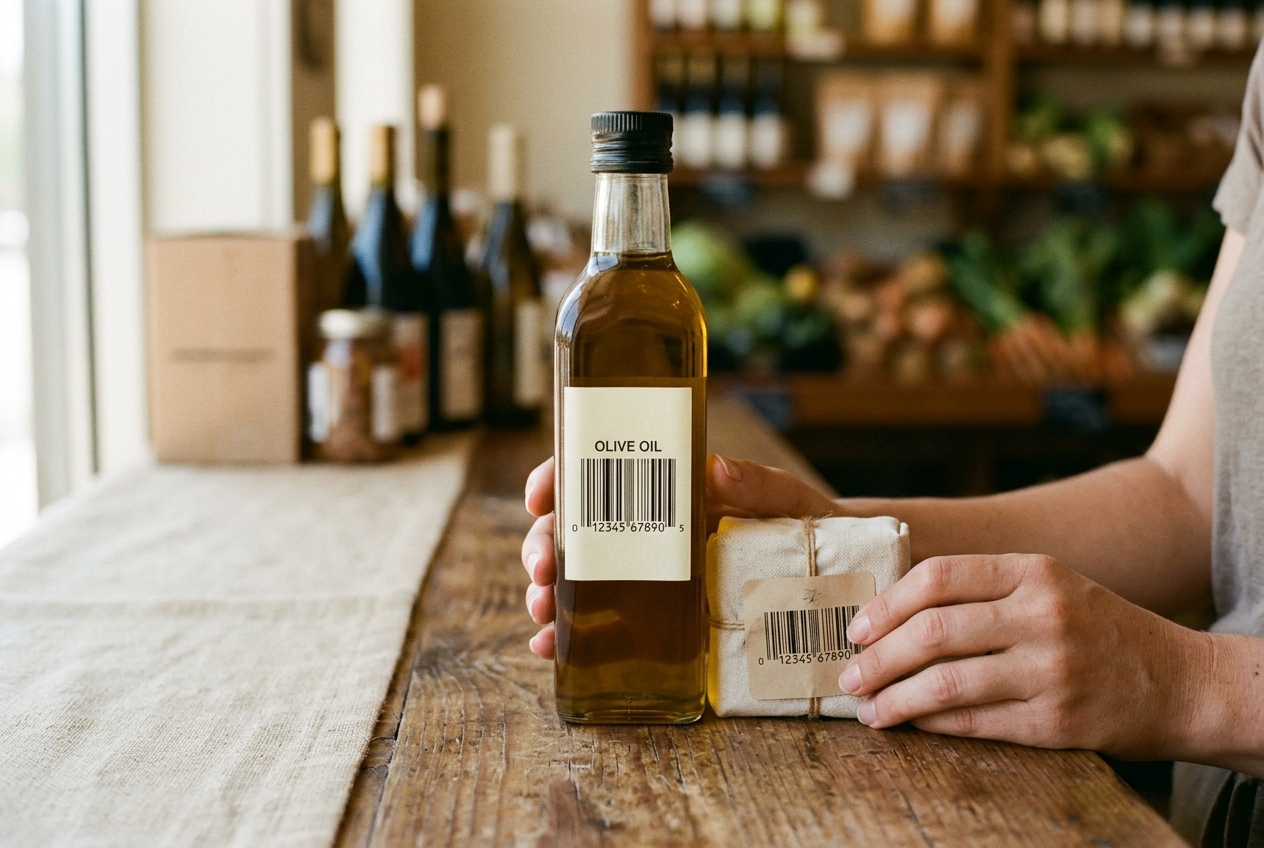
What everyday technology was first used commercially in 1974 on a pack of Wrigley's chewing gum in Ohio?
- the magnetic stripe card
- the barcode
- the electronic price tag
- the laser checkout scanner
Answer: the barcode — The first product ever scanned with a barcode was a 10-pack of Wrigley's Juicy Fruit gum at a Marsh supermarket in Troy, Ohio on June 26, 1974—a moment so pivotal that the Smithsonian acquired the actual gum pack for its collection. The cashier, Sharon Buchanan, passed the pack over a scanner built by IBM and NCR, heard a beep, and retail entered a new era. That same technology now processes over five billion scans every day worldwide, making the barcode one of the most ubiquitous inventions of the 20th century—and it all started with ten sticks of gum in a mid-sized Ohio grocery store, chosen because Wrigley's happened to be the first product pulled from the shelf that morning.
The Decade-Long Race to Reinvent Checkout
The barcode's debut in Troy, Ohio capped nearly 25 years of R&D that began with a 1948 patent filed by Norman Woodland and Bernard Silver, two Drexel Institute graduate students who sketched the first barcode design in sand on a Florida beach. Woodland adapted Morse code into thick and thin bars, creating a bulls-eye pattern he believed could be read from any angle. But 1940s technology couldn't support it: lasers didn't exist, and computers were room-sized behemoths. The idea sat dormant until the 1970s, when IBM engineer George Laurer refined it into the now-familiar Universal Product Code or UPC, a rectangular array of black stripes encoding a 12-digit number. Laurer's design could withstand smudges, tears, and angled scans, solving the reliability problems that had stymied earlier attempts. RCA pitched a competing bulls-eye design, but the grocery industry's ad-hoc committee chose Laurer's rectangle in 1973, setting the stage for the Marsh supermarket test. IBM and NCR rushed to manufacture scanners and print codes on packaging, a logistical feat that required cooperation from dozens of manufacturers who had to retool their printing presses overnight.
One Beep, Then Ten Billion More
At 8:01 a.m. on June 26, 1974, Sharon Buchanan, a Marsh cashier, lifted a ten-pack of Wrigley's Juicy Fruit gum—retail price 67 cents—and passed it over a scanning window embedded in her checkout counter. A helium-neon laser read the stripes, a computer looked up the price, and a receipt printer confirmed the sale. The entire transaction took three seconds, half the time of manually keying in prices. Clyde Dawson, Marsh's head of research, had deliberately stocked the store's shelves with barcoded products from companies willing to participate in the trial, including Heinz, Nestlé, and General Mills. Within months, Marsh reported that checkout times dropped by 40 percent and pricing errors fell nearly to zero, because cashiers no longer mistyped digits on a keypad. The gum pack itself became an artifact: the Smithsonian's National Museum of American History acquired it in 2005, and it now sits in a climate-controlled vault alongside the original Wright Flyer and Edison's light bulb. That single beep in Ohio triggered a cascade—today, barcodes are scanned more than five billion times a day in grocery stores, warehouses, hospitals, and airports, a ubiquity Woodland and Silver could never have imagined when they were drawing lines in beach sand.
The Human Cost Nobody Predicted
The barcode's efficiency came at a price. Within five years of the Marsh trial, supermarkets across North America began laying off cashiers, consolidating checkout lanes, and eliminating price-sticker clerks who had manually labeled every can and box. A 1977 study by the United Food and Commercial Workers union estimated that barcode adoption had eliminated 25,000 grocery jobs in the U.S. and Canada, a figure that climbed into the hundreds of thousands by the 1980s. Cashiers who remained found their work intensified: stores tracked scan rates per minute and used the data to set quotas, turning checkout into a high-speed assembly line. Labor activists called the barcode a
What most people get wrong
Most people believe barcodes contain product names, prices, or descriptions—but the stripes encode only a 12-digit number that serves as a lookup key. The price isn't in the barcode; it lives in the store's computer database, which is why the same box of cereal can ring up at different prices in different stores, and why sale prices update instantly without reprinting any packaging.
Sources & further reading
Word of the Day
limber adjective · LIM-ber
Capable of bending easily; flexible and supple in body or mind. The word descends from the obsolete English 'limber' meaning a shaft or pole (related to 'limb'), evoking the pliancy of a sapling branch that bends without breaking.
“The dancer remained limber well into her sixties, touching her toes each morning without effort. His limber mind adapted to the new software faster than colleagues half his age.”
Joke of the Day
Why did the barcode refuse to work at the artisan farmers' market?
It couldn't handle being scanned by someone who still insisted on handwriting price tags.
This Day in History
1886 — The Statue of Liberty was officially dedicated on Bedloe's Island in New York Harbor on October 28, 1886, after a decade-long Franco-American construction saga plagued by funding shortfalls and engineering headaches. French sculptor Frédéric Auguste Bartholdi designed the 151-foot copper colossus as a gift celebrating American independence and abolition, while Gustave Eiffel engineered the iron skeleton that holds her upright against harbor winds. President Grover Cleveland presided over the ceremony in a cold rain, telling a crowd of dignitaries that the statue would stand as a beacon to immigrants—a prophecy fulfilled when more than 12 million arrivals passed her torch between 1892 and 1954, glimpsing Lady Liberty as their first sight of the New World.
Enjoyed this issue?
Get the next one free, every morning.
More from Words IQ