Friday, November 6, 2026
The Parker Brothers bought a game designed to rage against landlords
By Corey Lewis · Editorial standards
Trivia of the Day
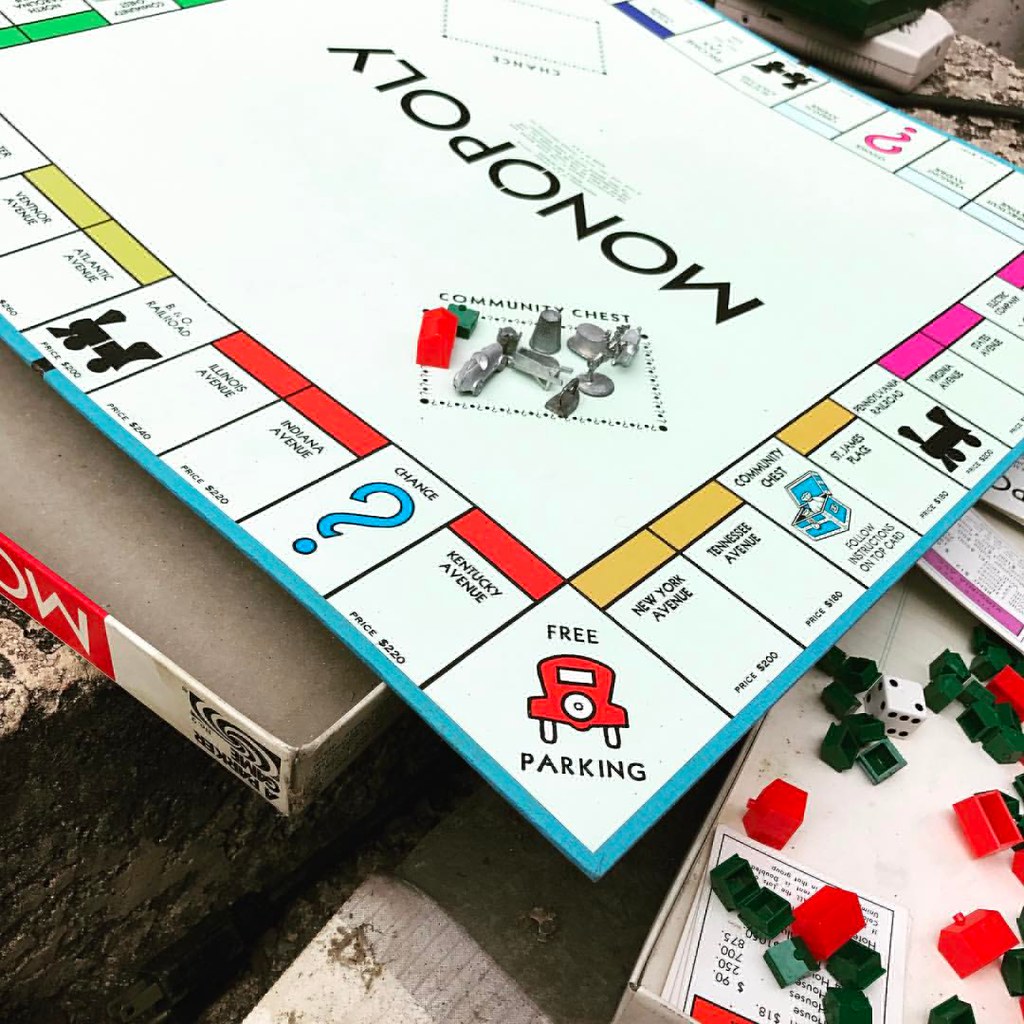
Which beloved board game was originally invented in 1903 to teach people why capitalism was bad?
- The Game of Life's origin as insurance company advertising
- The Monopoly game's origin as anti-capitalist teaching tool
- Clue's origin as wartime propaganda about rationing
- Risk's origin as military recruitment material
Answer: The Monopoly game's origin as anti-capitalist teaching tool — Elizabeth Magie patented The Landlord's Game in 1904 with two sets of rules—one monopolist, one where all players prospered—to demonstrate Henry George's single-tax theory, in which unchecked land ownership strangled the economy. The game sat in Quaker communities and college economics classes for three decades before Charles Darrow repackaged it, sold it to Parker Brothers in 1935 for a fortune, and became celebrated as its inventor while Magie received $500 and watched her anti-monopoly lesson become a celebration of crushing your opponents. The irony writes itself: a game designed to show how landlords destroy communities became the bestselling board game in history, teaching children that bankrupting their family is victory.
The Quaker Feminist Who Gamed Capitalism
Elizabeth Magie stood at the patent office in 1904 holding drawings of a square board, property deeds, and play money. The 38-year-old stenographer and aspiring inventor had spent a year designing The Landlord's Game, a teaching tool meant to illustrate the economic theories of Henry George, whose 1879 book Progress and Poverty argued that land monopolies strangled prosperity. George proposed a single tax on land value to replace all other taxes, redistributing wealth and breaking the stranglehold of landlords. Magie, a committed Georgist, believed a game could make the abstract concrete: players would feel the desperation of paying rent to monopolists who contributed nothing but ownership. She built two rule sets into her patent. Under monopolist rules, one player accumulated all properties and bled opponents dry. Under prosperity rules, every rent payment went into a public treasury that paid out when players landed on key spaces, demonstrating how shared wealth benefited everyone. The Landlord's Game spread through Quaker communities, economics classrooms at the University of Pennsylvania, and progressive social circles—anywhere people gathered to debate wealth inequality and land reform in the Gilded Age.
Magie manufactured handmade sets and licensed the game to a small publisher in 1906, but it never broke into the mass market. For three decades, The Landlord's Game circulated in a netherworld of homemade boards and house rules. College students sketched their own versions, naming properties after campus landmarks. By the 1920s, Quaker communities in Atlantic City played a variant with streets from their seaside town—Baltic Avenue, Boardwalk, Marvin Gardens. The prosperity rules vanished almost immediately; players found bankrupting each other more visceral than collective prosperity, precisely the addiction to competition Magie had meant to critique. In 1932, a Philadelphia heating engineer named Charles Darrow learned the Atlantic City version at a friend's dinner party. Unemployed in the Depression's depths, Darrow saw a product, not a polemic. He redrew the board in art-deco style, replaced Magie's hand-lettered cards with clean typography, and pitched it to Parker Brothers in 1934. The company rejected it for containing 52 fundamental errors. Darrow printed 5,000 sets himself, sold them through Philadelphia department stores, and returned to Parker Brothers in 1935 with sales receipts. This time, they bought it outright, paid Darrow royalties, and made him the public face of Monopoly as the unemployed tinkerer who invented a game in his basement.
The $500 Buyout and the Erased Inventor
Parker Brothers' lawyers knew about Elizabeth Magie. The Landlord's Game patent sat in public records, and homemade versions still circulated. In 1935, the company offered Magie $500 with no royalties to buy her original patent and two additional game patents she held, securing their legal position against infringement claims. She accepted, eager to see her game reach millions, still believing Monopoly would teach George's single-tax gospel. Parker Brothers' marketing department had other plans. They scrubbed the game's political origins, emphasized the thrill of winning, and positioned Darrow as the inventor in every press release, interview, and advertisement for the next four decades. Magie gave one interview to The Washington Post in 1936, explaining the game's educational purpose and her role in creating it. The article ran once and disappeared. By the 1970s, when economists Ralph Anspach began researching Monopoly's origins while defending his parody game Anti-Monopoly in court, he had to dig through library archives, track down elderly players who remembered the 1920s versions, and hire genealogists to locate Magie's descendants. Her name had been so thoroughly erased that even game historians assumed Darrow invented it whole. The 1974 lawsuit revealed Magie's patent and the Atlantic City Quakers' role. A federal judge ruled in 1977 that Parker Brothers had no valid claim to exclusive trademark because Monopoly descended from a public-domain folk game, but by then the company had sold 80 million copies. Darrow died wealthy in 1967. Magie died in 1948 in Virginia, having watched her pointed economic satire become a celebration of the very monopolistic greed it meant to condemn.
The disappeared prosperity rules reveal how thoroughly capitalism swallowed Magie's lesson. Under those rules, rents funded communal improvements—landing on utilities or railroads triggered payouts from the public pot, simulating George's land-value tax. But Parker Brothers never printed the prosperity rules in mass-market editions. Players knew only the monopolist path: buy, develop, bankrupt. Families spent holidays crushing each other financially, then praised the game for teaching budgeting and investment strategy. In 1973, economics students at San Francisco State University tried playing with the prosperity rules after rediscovering them in academic papers. The game lasted hours longer and felt, participants reported, boring—everyone stayed solvent, no dramatic bankruptcies occurred, and the competitive thrill vanished. The lesson Magie tried to encode—that shared wealth produces shared stability—couldn't compete with the addictive dopamine hit of watching an opponent land on Boardwalk with two hotels. Monopoly's success proved her point precisely backward: people enjoyed monopolistic cruelty so much they'd pay money to practice it on their families.
The Ironic Legacy of the Anti-Capitalist Game
Monopoly became the bestselling board game in history, moving past 275 million copies by 2015, translated into 47 languages and licensed into more than 1,300 themed editions—Star Wars Monopoly, Pokémon Monopoly, even Socialism Monopoly, released in 2019 as right-wing satire. Economists cite it in papers on market concentration. Business schools use it to teach negotiation tactics. Families still play it at Thanksgiving, still flip boards when someone builds hotels on Park Place, still argue over house rules that redistribute money because the core rules feel too brutal without modification—the very interventions Magie advocated. The game's durability stems from the same mechanism she identified in 1904: consolidating resources feels rewarding, and watching others lose feels like proof of your strategic superiority, even when the dice determine half the outcomes. Monopoly's World Championship, held since 1973, crowns players who optimize rent extraction and property trading, skills with zero applicability to actual real-estate markets but perfect training for zero-sum thinking. Magie would recognize the monster she built. Her goal was to make monopolistic capitalism repulsive by forcing players to experience its cruelty firsthand. Instead, she discovered that simulated cruelty, contained within a board and removable when dinner is ready, feels like harmless fun. The game taught millions of children that economic domination is a legitimate victory condition, that bankruptcy is a personal failure rather than a structural outcome, and that someone must lose for you to win. Elizabeth Magie set out to dismantle capitalism and accidentally became its most effective propagandist, proving that even the sharpest satire can be swallowed whole if it's fun enough to play.
What most people get wrong
Most people believe Charles Darrow invented Monopoly in his basement during the Depression. In reality, he copied a decades-old game already popular in Quaker and academic circles, and Parker Brothers paid the actual inventor $500 to secure the patent while crediting Darrow as the sole creator.
Word of the Day
captious adjective · KAP-shuhs
Marked by an often ill-natured inclination to stress faults and raise objections, especially over trivial matters; calculated to confuse, entrap, or entangle in argument. From Latin captiosus, meaning 'fallacious' or 'deceptive,' derived from captio ('a taking' or 'deception'), itself from capere ('to take'). The word originally described arguments designed to catch opponents in logical traps, but evolved to characterize people who habitually find fault.
“The restaurant critic's captious review fixated on the water glasses being filled from the left rather than the right, ignoring the extraordinary meal entirely. When her captious questioning during the lecture devolved into nitpicking the font choice on a single slide, the audience began checking their phones.”
Joke of the Day
Why did the Monopoly inventor refuse to celebrate Parker Brothers' bestseller list?
She realized her anti-capitalism lesson had become capitalism's favorite teacher.
This Day in History
1860 — Abraham Lincoln was elected the 16th President of the United States with only 39.8% of the popular vote, winning no Southern states and appearing on no ballots in ten of them. His victory on a platform opposing slavery's expansion into new territories triggered immediate secession threats. Within six weeks, South Carolina left the Union, followed by six more states before Lincoln's March 1861 inauguration, setting the nation irrevocably on the path to civil war. The election proved that the nation's fracture over slavery had become too deep for any political compromise to bridge.
Enjoyed this issue?
Get the next one free, every morning.
More from Words IQ