Friday, October 30, 2026
This bell's fame eclipsed the tower holding it—which one?
By Corey Lewis · Editorial standards
Trivia of the Day
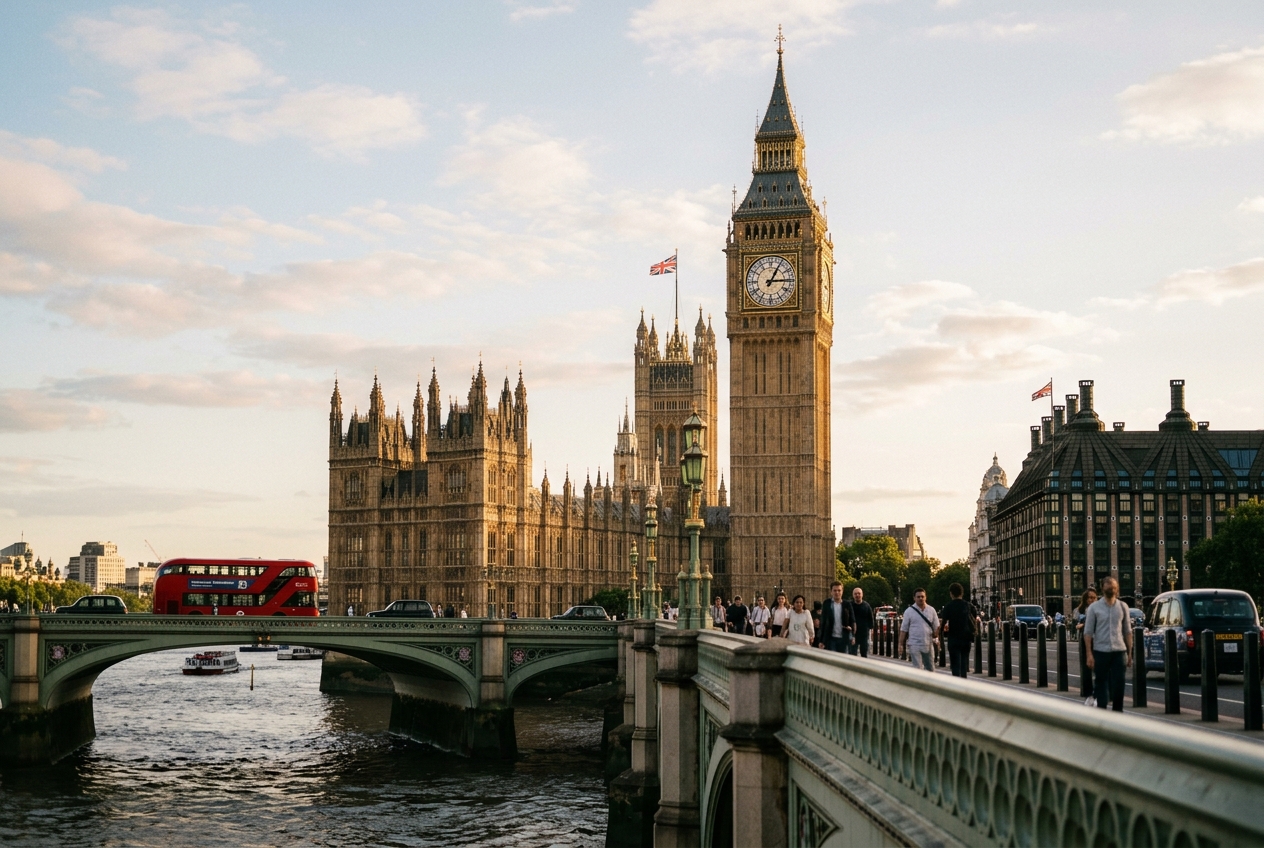
Which famous landmark's name is often used for a tower, but officially belongs only to the bell inside it?
- The Liberty Bell
- Big Ben
- The Tsar Bell
- St. Mary's Campanile
Answer: Big Ben — Big Ben is the great bell inside the Elizabeth Tower at Westminster, cast in 1858 and weighing 13.7 tons—the name honors Sir Benjamin Hall, whose name is inscribed on the metal. Tourists worldwide mistakenly call the entire Gothic Revival tower 'Big Ben,' but the clockwork and four clock faces are separate from the bell itself, which strikes the hours with a distinctive E-natural tone heard across central London. The tower itself is the Elizabeth Tower, and the Great Clock is a third, separate piece of engineering.
The Bell That Became a Tower
Big Ben entered service on July 11, 1859, after two years of turmoil that nearly derailed the project entirely. The original bell, cast by John Warner & Sons at Stockton-on-Tees in 1856, cracked during testing in Palace Yard before ever reaching the tower, forcing a complete recast at a different foundry. The replacement, recast by George Mears at the Whitechapel Bell Foundry in 1858, weighs 13.7 metric tons and stands about 2.2 meters tall. Within two months of installation it too cracked—a hairline fracture caused by an oversized hammer—but rather than remove the 13-ton bell from its chamber 96 meters above ground, Astronomer Royal Sir George Airy had it rotated it one-quarter turn and fitted a lighter hammer, so it struck an undamaged section. That repair, made in 1863, produced the slightly off-key E-natural bong that has marked the hours ever since, transmitted by BBC Radio from 1923 onward and heard by millions during wartime addresses.
The Name Nobody Intended for a Tower
No documents prove who christened the bell 'Big Ben,' but two competing traditions survive from the 1850s. The leading theory credits Sir Benjamin Hall, the First Commissioner of Works who oversaw the rebuilding of Parliament after the 1834 fire; his name appears cast into the bell's metal, and he was a famously large man. A rival story points to Benjamin Caunt, a heavyweight boxing champion of the era who stood six foot two and fought under the nickname 'Big Ben.' Whichever Benjamin inspired the name, it applied only to the bell. The 96-meter tower was officially just the Clock Tower until 2012, when it was renamed Elizabeth Tower for Queen Elizabeth II's Diamond Jubilee, yet the public still calls the entire structure Big Ben, a mix-up that has stuck for more than 150 years.
The Clock Faces That Time Forgot
The Great Clock—the actual timekeeping mechanism—was designed by Edmund Beckett Denison and built by the Dent clockmaking firm. It was finished in 1854 but sat in storage until the tower was ready, and began keeping time in 1859. Each of the four dials spans seven meters and contains 312 panes of opalescent glass, backlit at night by energy-efficient LEDs since the 2017–2022 restoration. The minute hands alone measure about 4.2 meters and weigh 100 kilograms apiece, driven by a gravity escapement so precise that adding or removing a single pre-decimal penny on the pendulum adjusts the clock's rate by 0.4 seconds per day. During World War II, the clock faces went dark to deny German bombers a navigation landmark, though the bells kept ringing; one bomb destroyed the Commons chamber in May 1941, but the tower itself survived with only minor damage. The Clock Tower's silhouette became a symbol of British resilience, its dials lit again on April 30, 1945, yet even then, newspapers and newsreels conflated 'Big Ben' with tower, clock, and bell interchangeably.
Why the Mistake Endures—and Why It Matters
The Elizabeth Tower is one of the most photographed buildings on Earth, usually framed from Westminster Bridge or Parliament Square. Guidebooks, postcards and souvenir shops use 'Big Ben' as shorthand for the whole thing, which keeps the mix-up alive. The confusion serves a practical purpose: 'Big Ben' is shorter, punchier, and easier for non-English speakers to pronounce than 'Elizabeth Tower,' making it a perfect two-syllable brand. Yet historians and bell enthusiasts argue the sloppiness erases the engineering triumph of the Great Clock and the foundry artisanship of the bell itself, reducing three separate masterworks—tower, clock, bell—to a single blurry icon. In 2022, a five-year restoration costing about £80 million finished and the bell rang out again, and nearly every news report of it called the tower Big Ben. The name is going nowhere.
What most people get wrong
Most people believe Big Ben is the name of the tower or the clock, when in fact it refers only to the great bell inside. The tower itself is officially called the Elizabeth Tower, renamed in 2012 from its earlier designation as simply the Clock Tower.
Sources & further reading
Word of the Day
variegated adjective · VAIR-ee-uh-gay-tid
Marked by variety, especially having patches or streaks of different colors; exhibiting diversity in appearance or character. From Latin *variegare* ('to make varied'), itself from *varius* ('diverse, changing'), the term migrated through botanical and textile trades before spreading to describe anything displaying irregular contrast.
“The variegated leaves of the hosta plant—striped in cream and forest green—made it a favorite among shade gardeners. In a different sense, the city's variegated neighborhoods ranged from industrial waterfronts to tree-lined brownstone blocks, each with its own rhythm and dialect.”
Joke of the Day
Why did the clockmaker refuse to repair Big Ben after the 1859 crack?
He didn't want to strike while the iron was hot.
This Day in History
1974 — On October 30, 1974, Muhammad Ali defeated George Foreman in the eighth round of the 'Rumble in the Jungle' in Kinshasa, Zaire, reclaiming the world heavyweight title at age 32. Foreman had been heavily favored, but Ali's rope-a-dope strategy—leaning against the ropes and absorbing blows until his opponent exhausted himself—turned conventional boxing wisdom upside down. The fight, watched by an estimated one billion viewers worldwide, became a cultural watershed, blending Cold War politics (Zaire's Mobutu regime bankrolled the $10 million purses), Black pride movements, and Ali's return from his Vietnam War exile, cementing his status as one of the century's most influential athletes.
Enjoyed this issue?
Get the next one free, every morning.
More from Words IQ