Thursday, October 22, 2026
Who legally owns the summit of Japan's most famous peak?
By Corey Lewis · Editorial standards
Trivia of the Day
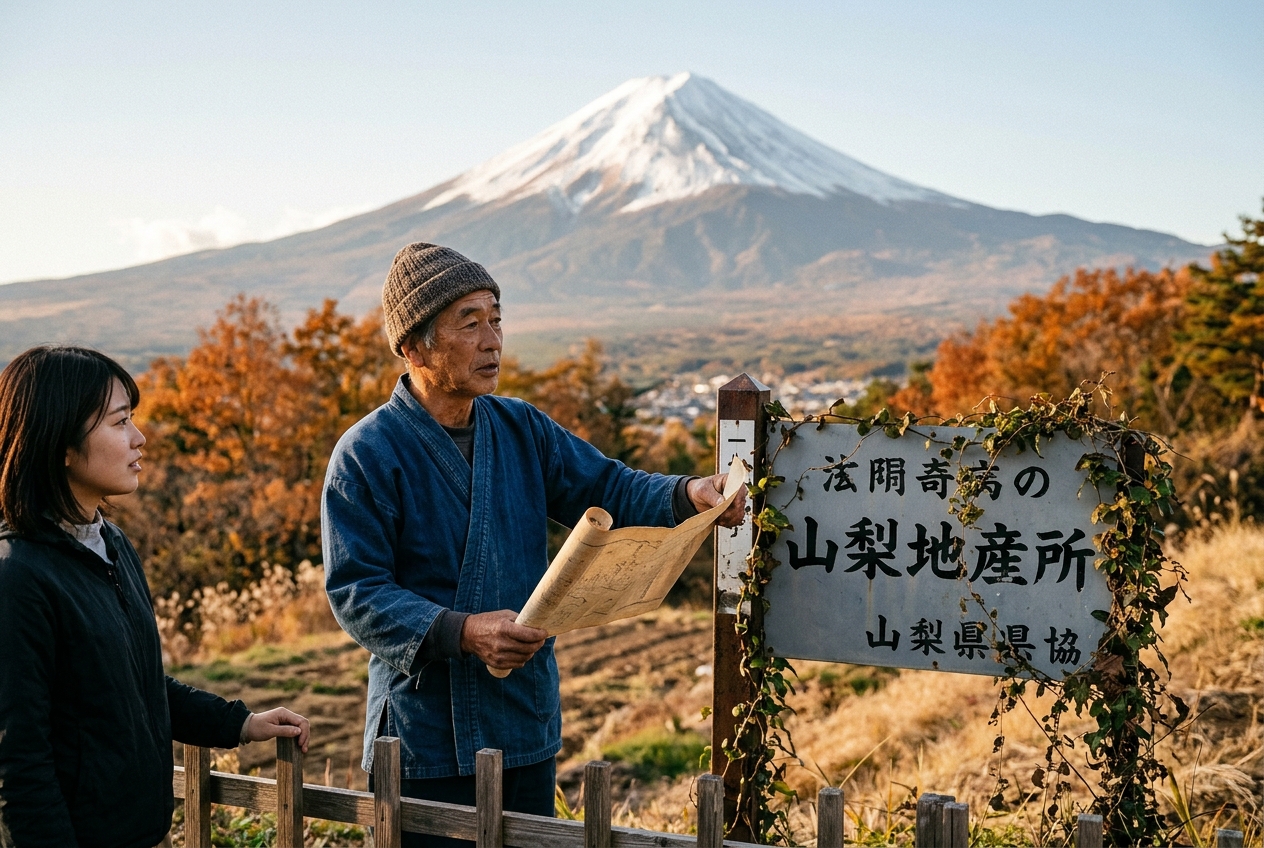
What famous mountain technically belongs to a Shinto shrine rather than the Japanese government?
- Mount Fuji's official ownership
- Mount Kilimanjaro's peak status
- Mauna Kea's sacred summit
- Mount Olympus's historic claim
Answer: Mount Fuji's official ownership — Mount Fuji's summit has been officially owned by the Sengen Grand Shrine since 1609, returned after a centuries-long legal dispute settled in 1974. The shrine's deed covers everything above the eighth station—roughly the top quarter of the mountain—making it one of the world's few privately owned national icons. Japan's government leases the summit for public access, paying no rent but honoring the shrine's centuries-old claim, and climbers reaching the top technically cross onto religious property governed by Shinto priests rather than Tokyo bureaucrats.
The Shogun's Gift That Stuck
In 1609, Shogun Tokugawa Ieyasu made a peculiar decision: he granted the upper slopes of Mount Fuji to the Fujisan Hongū Sengen Taisha, the head shrine of more than 1,300 Sengen shrines scattered across Japan. The donation wasn't arbitrary—Sengen shrines had worshipped the mountain as the earthly form of the goddess Konohanasakuya-hime for centuries, and Ieyasu's gift formalized what devotees already believed. The deed specified everything above the eighth station, roughly 12,388 feet, where the summer snow line begins and the air grows thin enough that ancient pilgrims considered it the threshold of the divine. For 250 years the arrangement went unchallenged, priests managing the summit trails while the Tokugawa shogunate governed below. Then the Meiji Restoration arrived in 1868, and the new government seized religious properties nationwide, including Fuji's peak. The shrine lost its summit, and the mountain became state property under a modernizing regime that saw Shinto holdings as feudal relics. The priests kept records, but the land was gone—at least on paper.
The dispute simmered for a century. After World War II, Japan's 1947 constitution separated religion and state, complicating any return of the summit to a Shinto institution. The shrine filed a formal claim in 1952, arguing that the Meiji seizure had been illegal under the shogun's original deed and that the mountain's spiritual significance predated any government. The case crawled through courts for two decades, delayed by debates over whether a peak could be privately owned when it functioned as a public symbol. Legal scholars pointed out the oddity: Fuji appeared on currency, served as a pilgrimage destination for millions, and anchored Japan's self-image, yet the land itself had been taken without compensation. In 1974, the Supreme Court sided with the shrine. The government returned the summit above the eighth station—roughly 100 acres of rock, ice, and volcanic crater—restoring the 1609 grant. The shrine regained its deed, and Japan's most famous mountain became private property again, owned by priests who trace their stewardship back four centuries. The handover made no headlines abroad, but in Japan it settled a question older than the nation itself.
The Lease Nobody Pays
Today, the summit operates under an informal arrangement that keeps the mountain open while respecting the shrine's ownership. The Japanese government leases the peak for public access, but no money changes hands—the shrine considers stewardship a religious duty, not a revenue stream, and Tokyo honors that by maintaining trails, weather stations, and rescue posts without asserting ownership. Climbers who reach the 12,389-foot summit each summer, roughly 300,000 people annually, cross onto shrine land without realizing it. The boundary sits just above Fuji's tenth station rest huts, where the final push begins and most hikers pause to catch their breath. From there to the crater rim, every rock belongs to the Sengen Taisha, and the priests technically hold the right to close it. They never have. The shrine's chief priest visits the summit each summer during the July-to-September climbing season, performing Shinto rites and sweeping the torii gate that marks the peak's entrance. The gate itself is shrine property, rebuilt every few decades from hinoki cypress, and climbers often photograph it without knowing they're standing on one of the world's most unusually owned summits.
The arrangement works because neither side presses advantage. The government needs the peak open—Fuji is a UNESCO World Heritage site and a cornerstone of Japan's tourism economy, drawing visitors who spend an estimated ¥200 billion annually in surrounding towns. The shrine needs the government's infrastructure—trails erode under hundreds of thousands of boots each season, and without state-funded maintenance the mountain would become impassable. So the lease continues, unwritten and rent-free, a handshake deal between priests and bureaucrats that respects both access and ownership. The only visible reminder of the shrine's claim is a small stone marker near the summit, installed in 1974, noting that climbers have entered sacred ground. Most people miss it. But the deed sits in the shrine's archive in Fujinomiya City, a 415-year-old document proving that Japan's most public mountain is, in fact, private—and likely to remain so as long as the volcano stays dormant and the priests keep sweeping.
The Boundary Nobody Can See
Defining where the shrine's land begins has always been tricky, because Fuji is a live volcano and its eighth station shifts with snow, erosion, and the occasional eruption. The 1609 deed described the boundary as
What most people get wrong
Most assume the Japanese government owns all of Mount Fuji because it's a national symbol and UNESCO World Heritage site, but the summit above the eighth station has belonged to the Fujisan Hongū Sengen Taisha shrine since 1609, returned by court order in 1974 after the Meiji government's seizure was ruled unlawful.
Word of the Day
crepitate verb · KREP-ih-tayt
To make a crackling or rattling sound, especially repeatedly; from Latin crepitare 'to crackle,' frequentative of crepare 'to rattle or crack.' Originally used in medicine to describe the sound of air bubbles in tissue or the grinding of broken bones, the word now applies to any persistent crackle—fire, joints, insects, or dry leaves underfoot.
“The campfire began to crepitate as rain hit the embers, each drop releasing a sharp hiss and pop that punctuated the evening quiet.”
Joke of the Day
Why did Mount Fuji refuse to pay property taxes?
Because the shrine owned the peak, and you can't tax what technically belongs to the gods.
This Day in History
1836 — Sam Houston was sworn in as the first president of the Republic of Texas on October 22, 1836, in Columbia, the temporary capital. Houston, who had led Texan forces to victory over Mexican General Santa Anna at the Battle of San Jacinto six months earlier, inherited a bankrupt republic with no international recognition, disputed borders, and mounting debts from the revolution. His inaugural address promised to seek annexation by the United States—a goal that would take nine years and nearly spark war with Mexico when it finally succeeded in 1845.
Enjoyed this issue?
Get the next one free, every morning.
More from Words IQ