Monday, October 12, 2026
A village so isolated its people order supplies five days in advance by boat
By Corey Lewis · Editorial standards
Trivia of the Day
What inhabited place on Earth is so remote that it takes five days by boat to reach the nearest store?
- Pitcairn Islands
- Svalbard
- Tristan da Cunha
- Easter Island
Answer: Tristan da Cunha — Tristan da Cunha sits 1,750 miles from the nearest inhabited land—South Africa—making it the most remote inhabited archipelago on Earth. The journey from Cape Town takes five to six days by boat, and there's no airport. When the island's 235 residents need groceries, medical supplies, or anything else not grown or made locally, they wait for one of the roughly nine supply ships that arrive each year, weather permitting.
The Edge of Everywhere
Tristan da Cunha is not just remote—it is the gold standard of remoteness, a volcanic speck in the South Atlantic Ocean where 235 people live on 38 square miles of land surrounded by 6,000 miles of open water in every direction. The archipelago sits 1,750 miles west of Cape Town, South Africa, and 2,088 miles east of the Falkland Islands. No commercial airline serves it. No regular ferry runs. The only link to the outside world is a handful of supply ships—usually fishing vessels or research boats—that make the five-to-six-day voyage from Cape Town roughly nine times a year, and only when the South Atlantic cooperates. The island has one settlement, Edinburgh of the Seven Seas, a cluster of low stone houses and a single general store stocked by those ships. When a supply vessel is delayed by storms, as happens often, the community makes do with what it has: potatoes, fish, and patience.
The island was discovered in 1506 by Portuguese admiral Tristão da Cunha, who never landed; the first permanent settlement didn't arrive until 1816, when the British established a garrison to prevent any attempt to rescue Napoleon from Saint Helena, 1,343 miles to the north. After Napoleon's death in 1821, the garrison withdrew, but a handful of men stayed behind—among them Corporal William Glass, a Scotsman who became the de facto founder of the modern community. He was joined by shipwreck survivors, sailors who jumped ship, and eventually women from Saint Helena and the Cape. By the mid-1800s, the island had a small but stable population sustained by farming, fishing, and trading supplies to passing whaling ships. When the whaling industry collapsed, Tristan's economy collapsed with it, and the island slipped into near-total isolation for decades.
The Volcano That Emptied the Island
In 1961, the island's volcano—dormant for centuries—erupted without warning. On the morning of October 10, a fissure opened near the settlement, and lava began flowing toward the harbor. The entire population, 264 people, was evacuated by a passing trawler and Royal Navy ships. They were taken to England, where they were housed in a disused military camp in Surrey. The British government offered them resettlement packages: jobs, homes, a future on the mainland. But the Tristan islanders, after two years of cold weather, traffic, and noise, voted overwhelmingly to return. In 1963, they sailed back to find their homes largely intact, the lava flow having stopped just short of the town. The decision to return—despite offers of modern convenience—remains one of the clearest expressions of attachment to place in modern history.
Today, the island's economy depends on crawfish exports and the sale of postage stamps to collectors, both requiring those infrequent supply ships. There is a doctor, a school, a pub, a post office, and a small museum. Internet arrived in 2005 via satellite, but it remains slow and expensive. The general store is stocked by the South African fishing company Ovenstone, which operates the crawfish factory and provides most of the island's employment. When a ship arrives, the entire community turns out to unload it—there is no harbor deep enough for large vessels, so cargo is transferred by small boat in a process that can take days. If a storm hits mid-delivery, the ship must leave, and the island waits for the next one. Residents order goods months in advance, and shortages are routine.
Why It Still Matters
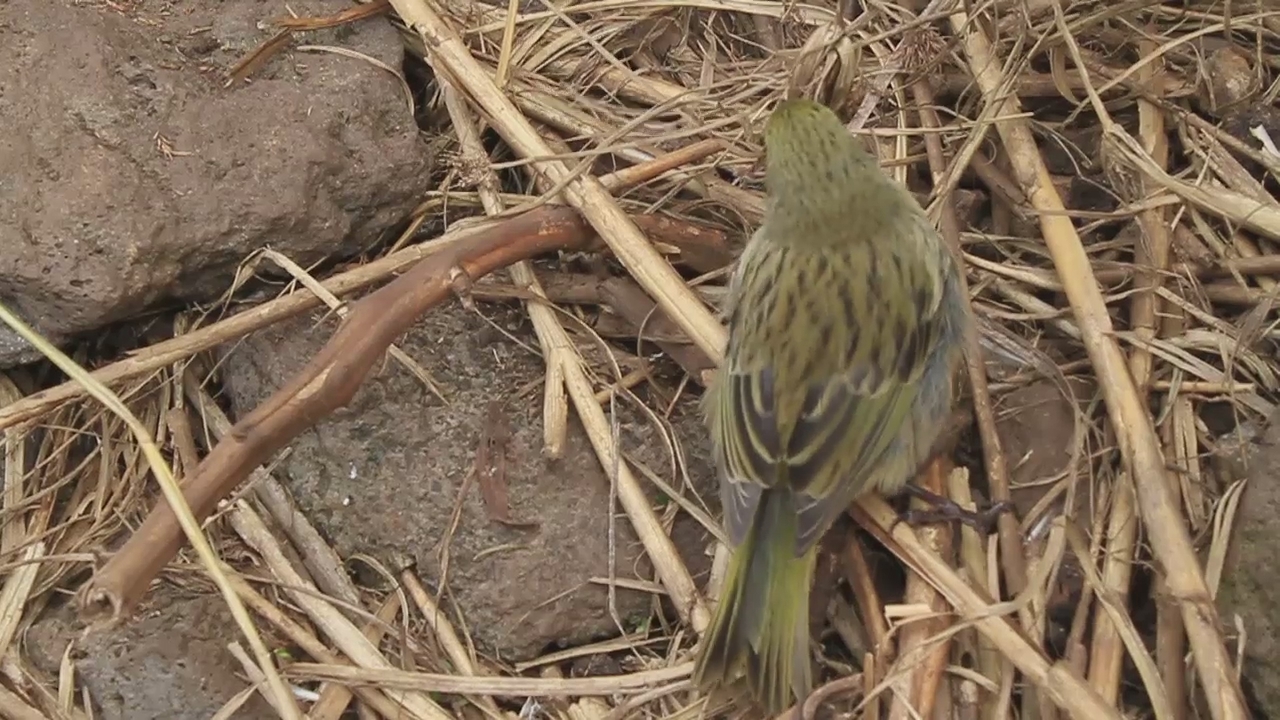
Tristan da Cunha is a living experiment in human resilience and the limits of isolation. In an age when next-day delivery is taken for granted, the island offers a stark reminder that geography still governs some lives absolutely. The community is one of the few places on Earth where self-sufficiency is not a lifestyle choice but a necessity, and where modern convenience is measured in weeks, not hours. It also serves as a bellwether for biodiversity: the archipelago is home to the endangered Tristan albatross, the northern rockhopper penguin, and the Tristan thrush, species found nowhere else. Scientists study the island's ecosystems as baselines for understanding environmental change in the absence of industrial pollution. And for historians, Tristan offers a rare case study of a micro-society that has maintained continuity for over two centuries without assimilation, where seven family names—Glass, Green, Hagan, Lavarello, Repetto, Rogers, and Swain—account for nearly the entire population, and where the community still makes decisions by consensus in a manner closer to 19th-century town meetings than 21st-century governance.
What most people get wrong
Many assume the Pitcairn Islands hold the title of most remote inhabited place, but Pitcairn is only 1,350 miles from Tahiti. Tristan da Cunha sits 400 miles farther from its nearest inhabited neighbor, and Pitcairn has periodic supply ships from New Zealand that take far less time than Tristan's five-to-six-day journey from Cape Town.
Word of the Day
redivivus adjective · red-ih-VY-vus
Brought back to life; revived or restored, especially after a long period of absence or dormancy. From the Latin *redivivus*, meaning 'restored to life' (from *re-* 'again' + *vivus* 'alive'), the word entered English in the 1600s through scholarly and medical writing, often applied to ideas, institutions, or practices thought extinct.
“The 1963 return of Tristan da Cunha's evacuees was a redivivus moment for a community the world had assumed would vanish into modernity. In literature, a redivivus style—archaic syntax revived by a contemporary novelist—can feel either inspired or forced.”
Joke of the Day
Why did the supply ship refuse to deliver motivational posters to Tristan da Cunha?
It didn't want to encourage anyone to 'reach for the stars'—the nearest star beyond the sun is still closer than the nearest grocery store.
This Day in History
1915 — The British nurse Edith Cavell was executed by a German firing squad in Brussels for helping Allied soldiers escape from occupied Belgium during World War I. Cavell, who ran a Red Cross hospital, had admitted to smuggling over 200 soldiers to neutral Netherlands, calling it her duty regardless of nationality. Her execution provoked international outrage, was widely condemned as barbaric even by Germany's allies, and became a powerful propaganda tool for Allied recruitment. Cavell's final words—'Patriotism is not enough. I must have no hatred or bitterness towards anyone'—became one of the war's most quoted epitaphs.
Enjoyed this issue?
Get the next one free, every morning.
More from Words IQ