Monday, October 12, 2026
This nut's shell is too toxic to sell—same oil as poison ivy
By Corey Lewis · Editorial standards
Trivia of the Day
What popular nut is never sold in its shell because the shell contains the same toxic oil found in poison ivy?
- the cashew
- the Brazil nut
- the macadamia nut
- the pistachio
Answer: the cashew — Cashew shells harbor urushiol, the same compound that gives poison ivy its infamous sting—potent enough that raw cashew processing requires gloves, ventilation, and roasting to neutralize the resin. A single brush with the shell can trigger blistering rashes identical to a poison ivy encounter, which is why you'll never see a cashew sold unshelled. The "raw" cashews at health food stores have already been heat-treated; truly raw cashews are toxic enough to hospitalize anyone who cracks one open barehanded.
The Poison Nobody Expected in a Snack Bowl
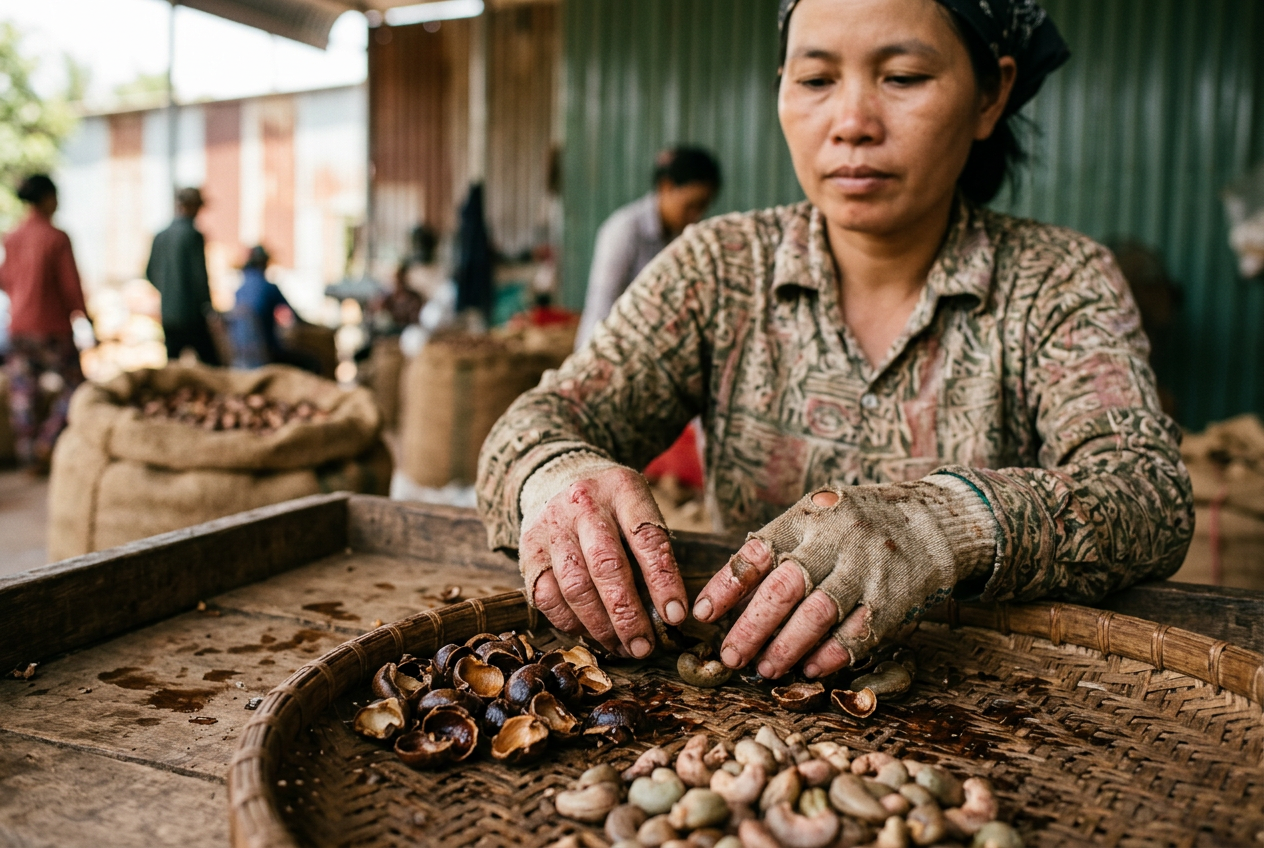
Cashews grow on trees in tropical climates, dangling beneath a fleshy pseudofruit called the cashew apple, but the kidney-shaped nut you toss into trail mix hides a dark secret between its shell layers. That shell contains anacardic acid and cardol—chemical cousins of urushiol, the oily allergen that makes poison ivy, poison oak, and poison sumac so memorably miserable. Touch a raw cashew shell and you'll develop the same weeping blisters, angry redness, and maddening itch that follow a hike through poison ivy. The reaction is no coincidence: cashews belong to the Anacardiaceae family, which also includes mangoes, pistachios, and yes, poison sumac. For centuries, farmers and processors in tropical cashew-growing regions learned the hard way that cracking cashews barehanded was a ticket to chemical burns. Even today, workers in Vietnam, India, and West Africa—where most cashews are grown—wear gloves and protective gear during shelling, and many facilities roast the shells first to deactivate the resin before manual cracking begins.
How the Industry Turns Toxic into Edible
Commercial cashew processing is a gauntlet of heat, ventilation, and careful handling that transforms a skin-blistering hazard into a sweet, buttery snack. After harvest, the curved shells are either roasted in open drums over wood fires or steamed in pressure vessels, both methods designed to break down urushiol and make the shell brittle enough to crack without releasing live resin. In traditional roasting, workers stand over smoky fires, turning wire baskets of shells while caustic fumes rise—exposure that still causes respiratory irritation and skin reactions despite precautions. Mechanical crackers then split the shells, and workers pick out the kernels by hand, discarding any that touched shell fragments. The extracted cashews are dried, peeled of their papery seed coat, and roasted a second time to eliminate any lingering toxins. The "raw" cashews sold in bulk bins and health stores have been through this entire process; they're raw only in the sense that they haven't been salted or flavored, not that they skipped the detoxification steps. Truly raw cashews—straight from the shell—are illegal to sell in most countries because the health risk is so well documented.
The Human Cost of Cheap Cashews
Behind every jar of cashews sits a labor force that absorbs the cost of that urushiol exposure, and the toll is measurable in scarred hands and chronic lung conditions. In India's processing plants, many workers—predominantly women—develop cashew dermatitis, a persistent rash that doesn't heal as long as they keep shelling nuts. Even with gloves, the caustic shell liquid seeps through worn fabric or splashes onto bare forearms, leaving dark burns that take weeks to fade. Respiratory problems are common in facilities that roast shells indoors, where smoke and aerosolized urushiol irritate airways and trigger asthma. Labor rights groups have documented conditions in Vietnamese and Indian factories where workers earn a few dollars a day, process thousands of nuts per shift, and receive little protective equipment or medical care for chemical injuries. Mechanization has improved safety in some large facilities, but the majority of the world's cashews are still cracked by hand, perpetuating a system where the price of a cheap snack is borne by people who can't afford to refuse the work. The contrast is stark: Western consumers pay premium prices for "raw" cashews marketed as health food, while the workers who made them safe enough to eat carry permanent scars.
Why the Shell Toxin Matters Beyond the Nut
Urushiol's presence in cashew shells isn't just a processing nuisance—it's a reminder that many plants we've domesticated retain chemical defenses we've learned to work around rather than eliminate. The cashew tree evolved its toxic shell resin to deter insects and animals from eating the seeds, and that defense is so effective that no breeding program has successfully created a non-toxic variety. Farmers have tried selecting for lower urushiol content, but the genes that produce the resin are tightly linked to traits that affect yield, disease resistance, and nut quality, making it nearly impossible to breed out without sacrificing the crop's viability. Meanwhile, researchers have found industrial uses for cashew shell liquid: it's processed into resins, varnishes, and brake linings, turning a waste product into a revenue stream. The compound's ability to polymerize under heat makes it valuable for coatings that resist water and chemicals, and some companies market it as a sustainable alternative to petroleum-based resins. In a twist, the same toxin that keeps cashews off backyard trees and out of home kitchens has become a niche ingredient in green chemistry, proving that what poisons one context can power another.
What most people get wrong
Many people assume "raw" cashews sold in stores are genuinely unprocessed, but every cashew available for purchase has been heat-treated to neutralize shell toxins—truly raw cashews would cause severe skin reactions and are never sold to consumers.
Word of the Day
vitriolic adjective · vi-tree-AH-lik
Bitterly scathing or caustic in tone, filled with harsh verbal criticism. From Latin vitriolum (sulfuric acid), the word originally referred to the corrosive liquid alchemists knew could eat through metal—by the 1700s, English speakers borrowed the chemical's burn to describe language that sears just as deeply.
“The senator's vitriolic speech left no doubt about his contempt for the proposed bill, each sentence dripping with accusation. Her review was so vitriolic that the playwright considered it a badge of honor, proof he'd struck a nerve.”
Joke of the Day
Why did the cashew farmer refuse to shake hands at the harvest festival?
He didn't want anyone to think he was poison ivy league.
This Day in History
1492 — Christopher Columbus made landfall in the Bahamas, an arrival that initiated sustained contact between Europe and the Americas and set in motion centuries of colonization, cultural exchange, and demographic upheaval across two continents. Columbus believed he'd reached the Indies near Asia, a geographic miscalculation that nonetheless opened transatlantic routes and reshaped global trade, migration, and power. The day is commemorated in various forms across the Western Hemisphere, though its legacy remains deeply contested given the catastrophic impact on indigenous populations.
Enjoyed this issue?
Get the next one free, every morning.
More from Words IQ