Friday, October 9, 2026

Words IQ.

Engineers gave up fighting a river—and built upward instead

Editorial standards

Trivia of the Day

The Panama Canal
Photo: smallcurio · CC BY 2.0

Which major engineering project was built with locks instead of at sea level because engineers couldn't control the Chagres River's flooding?

  1. The Suez Canal
  2. The Panama Canal
  3. The Kiel Canal
  4. The Corinth Canal

Answer: The Panama Canal — The Chagres River's seasonal flow varies so wildly—from gentle stream to raging torrent carrying 50,000 cubic feet per second—that French engineers under Ferdinand de Lesseps, flush from Suez success, watched their sea-level design collapse under repeated floods that drowned machinery and swept away excavation work. The American redesign in 1906 turned the river into an ally: they dammed it to create Gatún Lake, the largest artificial lake in the world at the time, and lifted ships 85 feet above sea level through locks. This decision cut excavation by half and gave the canal the water reserve it needed to operate year-round, making a liability into the project's greatest asset and rewriting how engineers think about working with, rather than against, nature.

The River That Broke an Empire's Will

Ferdinand de Lesseps arrived in Panama in 1881 with the confidence of a man who had already split a continent. His Suez Canal had joined the Mediterranean to the Red Sea in 1869, a sea-level trench through cooperative desert sand that made him a French national hero and convinced investors to pour 287 million francs into his next venture. But Panama was not Egypt. The Chagres River, which the canal route had to cross, swelled from a dry-season trickle of 2,000 cubic feet per second to a monsoon fury of 50,000, flooding the construction site so often that engineers watched the same excavation fill with silt three times in a month. By 1889, after eight years of work, 22,000 lives lost to yellow fever and malaria, and only two-fifths of the digging completed, the Compagnie Universelle du Canal Interocéanique collapsed into bankruptcy. The river had won. The sea-level dream was dead, and the United States, eyeing strategic advantage and commercial gain, bought the rights to finish what France could not.

Locks, Lakes, and the Radical Redesign

John Frank Stevens, the American chief engineer, walked the isthmus in 1905 and saw what de Lesseps had missed: the Chagres wasn't an obstacle to engineer around but a resource to harness. His plan, refined by successor George Washington Goethals, called for damming the river at Gatún to create a lake 164 square miles in area, raising ships 85 feet above sea level through a system of paired locks at each end. The locks themselves became marvels of precision—each chamber 1,000 feet long, 110 feet wide, walls of concrete 50 feet thick at the base, gates weighing 700 tons that swung on hinges so balanced a 40-horsepower motor could move them. Gatún Lake solved two problems at once: it drowned the Chagres's wildest stretches, eliminating the need to excavate the volatile Culebra Cut any deeper than necessary, and it provided the 52 million gallons of fresh water needed to cycle a single ship through the locks. The lake held enough reserve to operate the canal even in the dry season, a feat no sea-level design could match. Construction finished in 1914, seven years after the Americans took over, at a cost of 375 million dollars and 5,600 more lives.

The Human Costs Hidden in the Blueprints

The Panama Canal's death toll is often cited as 27,500, but that number masks who bore the weight. West Indian laborers, recruited from Barbados, Jamaica, and Martinique, died at three times the rate of white American workers—yellow fever, malaria, and dynamite accidents took 20,000 of them, yet their names appear on no memorial plaques at the canal's visitor center. The French years were worse: gravediggers in Colón kept a permanent night shift, and hospitals shipped so many coffins back to France that the Compagnie stopped publishing mortality reports to avoid spooking investors. Dr. William Gorgas, the American sanitation officer, cut the death rate by 90 percent by draining swamps, screening windows, and fumigating homes, but his mosquito-control program couldn't protect the men drilling in the Cut, where landslides buried entire crews in seconds. One slide in 1915 dumped 500,000 cubic yards of rock into the channel, undoing months of work and killing seven men whose bodies were never recovered. The canal opened to little fanfare—World War I dominated the headlines—but the ship traffic that followed, 1,000 vessels in the first year, justified every risk the engineers had calculated and every sacrifice the laborers had paid.

Why Locks Still Define Modern Shipping

The Panama Canal's lock system set the standard for ship dimensions worldwide.

What most people get wrong

Most people assume the Panama Canal runs east-west because it connects the Atlantic and Pacific, but the canal actually runs north-south—ships traveling from the Atlantic to the Pacific sail southeast, and the Pacific entrance at Panama City lies 27 miles east of the Atlantic entrance at Colón, a quirk of the isthmus's curve that surprises first-time visitors looking at a map.

Word of the Day

pusillanimous adjective · pyoo-suh-LAN-uh-mus

Lacking courage or resolution; timid or cowardly. From the Latin 'pusillanimis,' combining 'pusillus' (very small) and 'animus' (spirit or courage), the word entered English in the 16th century to describe someone whose spirit is so diminished they shrink from any bold action—a favorite insult in Shakespeare's time, now reserved for those whose fear outweighs their duty.

“The general's pusillanimous retreat, ordered at the first sign of resistance, cost his army the high ground and his reputation any shred of respect. Even in boardroom negotiations, her pusillanimous refusal to counter the lowball offer left her colleagues wondering whether she feared conflict more than she valued the contract.”

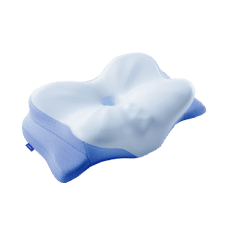
ErgoPillow's white contoured upper surface and blue support baseSponsored

ErgoPillow

Your bedtime upgrade starts here.

A contoured pillow with cooling-focused materials and targeted support zones, made for your nightly wind-down.

  • Contoured shape
  • Cooling-focused
  • 60-day return policy
Shop ErgoPillow

Return eligibility and shipping charges apply. Check current pricing and terms on the merchant's site.

We may earn a commission if you sign up or purchase through this link.

Joke of the Day

Why did the lock engineer refuse to design a sea-level canal after visiting Panama?

He didn't want to get in over his head—twice.

This Day in History

1967 — Che Guevara was captured by Bolivian forces in the village of La Higuera, ending his guerrilla campaign to export revolution across Latin America. The Argentine-born revolutionary, who had left Cuba in 1965 to ignite uprisings elsewhere, spent 11 months in Bolivia's remote highlands with a band of fighters that never exceeded 50, plagued by asthma, supply shortages, and peasant indifference to his Marxist message. Bolivian Army Rangers, trained and advised by CIA operatives, cornered him in a ravine after a firefight in which Guevara was wounded in the leg. He was executed the next day on government orders, but his death turned him into a global icon of rebellion, his image appearing on university dorm walls and protest banners within months, a martyr whose face outlasted the revolutions he tried to start.

Enjoyed this issue?

Get the next one free, every morning.

← All issues

Engineers gave up fighting a river—and built upward instead · Words IQ