Tuesday, November 17, 2026
A sport's name once got blamed on a sexist acronym—which one?
By Corey Lewis · Editorial standards
Trivia of the Day
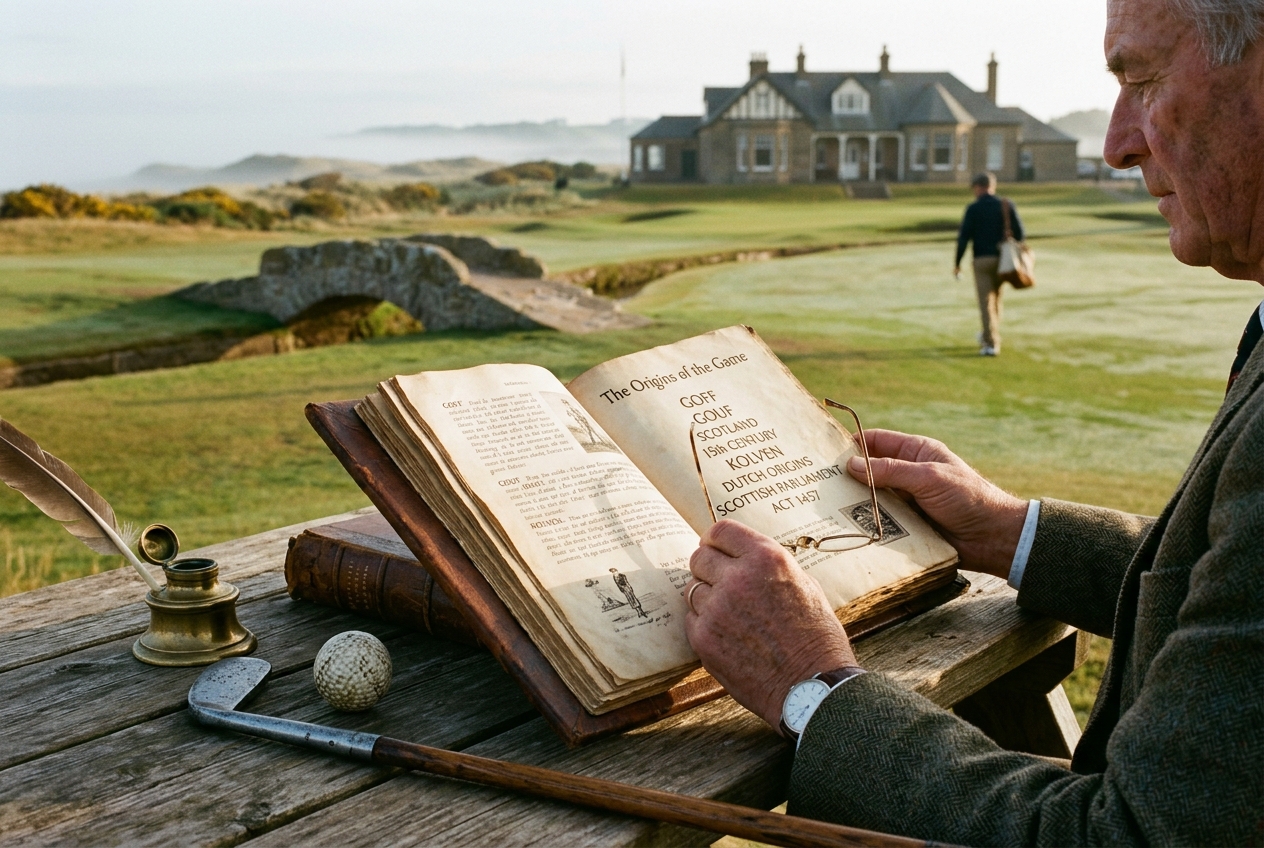
What common sport's name is NOT an acronym for 'Gentlemen Only, Ladies Forbidden' despite the popular belief?
- the word 'golf'
- the word 'tennis'
- the word 'polo'
- the word 'rugby'
Answer: the word 'golf' — Golf derives from the Dutch 'kolf' or 'kolve' meaning club, and Scottish records show women playing the game as early as the 1500s—Mary Queen of Scots was famously criticized for playing golf days after her husband's murder in 1567. The acronym myth spread widely in the 20th century, possibly fueled by real gender exclusion at many clubs, but linguistic evidence and historical documents confirm the word predates any such phrase by centuries.
The Dutch Root Behind the Game
The word 'golf' traces back to the Middle Dutch term 'kolf' or 'kolve,' meaning club or bat, used for various stick-and-ball games played across the Low Countries in the medieval period. Scottish merchants and traders maintained close ties with the Netherlands throughout the 1400s, and the linguistic borrowing likely occurred during this era of robust North Sea commerce. By 1457, the Scottish Parliament banned 'golfe' because it distracted men from archery practice—the earliest written record of the word in any language. The term evolved through Scots dialect as 'gouf' and 'goff' before standardizing as 'golf' by the 1600s. No credible etymological source supports the 'Gentlemen Only, Ladies Forbidden' backronym, which appears nowhere in historical documents and contradicts established linguistic scholarship. The Dutch connection is reinforced by other stick-and-ball games sharing the 'kolf' root, including 'kolven,' still played in parts of the Netherlands today.
Women on the Links in Renaissance Scotland
Scottish women participated in golf centuries before the modern club system emerged, with records showing female players on the links of St Andrews and Musselburgh in the 1500s and 1600s. Mary Queen of Scots played golf at Seton Palace in 1567, just days after her husband Lord Darnley's assassination—a scandal noted by her political enemies, who used her golfing as evidence of callousness rather than impropriety about her gender. The game was never legally restricted to men in Scotland; rather, it was a folk pastime open to anyone with access to common grazing land where the early courses were laid out. Catherine of Aragon, wife of Henry VIII, mentioned in a 1513 letter that she wished her husband would return from war to play golf, indicating the sport's acceptance among European nobility regardless of gender. The myth of male exclusivity likely stems from Victorian-era private clubs that did bar women, retroactively projected onto the game's entire history. By the time these clubs codified their sexist policies in the 1800s, women had already been playing golf for three hundred years.
How the Acronym Myth Took Root
The 'Gentlemen Only, Ladies Forbidden' fabrication appears to have originated in the late 20th century, spreading through forwarded emails, trivia books, and word-of-mouth repetition without any citation of primary sources. Backronyms—phrases reverse-engineered to fit existing words—became a popular form of folk etymology in the 1970s and 1980s, often presented as hidden historical truths. The golf acronym gained traction because it aligned with real gender discrimination at many prestigious clubs, making the false etymology feel emotionally plausible even when historically baseless. Augusta National Golf Club, home of the Masters, did not admit a female member until 2012; Muirfield in Scotland voted to allow women only in 2017. These genuine barriers lent the acronym story a veneer of credibility, allowing it to circulate in otherwise reputable publications and even museum exhibits. Linguists and historians have repeatedly debunked the claim, noting that acronyms as a naming device were exceedingly rare before the 20th century and that no 1400s-era Scottish sign or document contains such a phrase. The myth persists as a cautionary tale about how invented history can overshadow documented fact when the invented version fits a preexisting narrative.
Why the Truth Still Matters
Debunking the golf acronym is not mere pedantry; it clarifies both the game's real history and the actual mechanisms of gender exclusion. The fabricated backronym suggests golf was designed to bar women from the start, obscuring the fact that women played freely until Victorian social conventions and private club rules imposed restrictions. Understanding the true etymology—rooted in a Dutch word for a piece of equipment—also reveals the game's working-class origins, played on common land by shepherds and tradespeople long before it became associated with elite exclusivity. Modern efforts to expand access, including youth programs in underserved communities and ongoing battles over club membership policies, benefit from historical accuracy rather than myth. The persistence of the acronym story also illustrates how easily misinformation spreads in the digital age, even when authoritative sources have thoroughly corrected the record. Golf's real history is more complex and more interesting than the false acronym: a Dutch-origin folk game, embraced across social classes in Scotland, played by queens and commoners alike, then later restricted by club rules that had nothing to do with the name. The word 'golf' carries no hidden meaning—it simply names the tool used to strike the ball.
What most people get wrong
Many people believe the acronym dates back to golf's origins and reflects the sport's founding principles, but in fact golf was never legally or culturally restricted to men in its early centuries—the exclusionary club policies came much later and have no connection to the word itself.
Sources & further reading
Word of the Day
phlegmatic adjective · fleg-MAT-ik
Having an unemotional, calm, and stolidly unexcitable temperament; in ancient and medieval physiology, governed by an excess of phlegm, one of the four bodily humors believed to make a person sluggish and apathetic. The term descends from Greek 'phlegmatikos,' relating to inflammation or mucus, later adopted into Latin and Renaissance medical theory. Though the humoral theory has been discarded, the psychological sense endures to describe someone who remains composed and slow to anger or enthusiasm, often maddeningly so.
“The ship's captain remained phlegmatic even as the hull scraped the iceberg, calmly ordering lifeboats lowered while passengers screamed around him. My phlegmatic neighbor shows the same unflappable expression whether winning the lottery or discovering his basement flooded—nothing seems to move him.”
Joke of the Day
Why did the ancient Roman refuse to work at the gym after retirement?
He spent his whole career perfecting the art of reclining on couches and wasn't about to give up his core competency.
This Day in History
1869 — The Suez Canal officially opened on November 17, linking the Mediterranean Sea to the Red Sea and cutting the Europe-to-Asia shipping route by thousands of miles. French diplomat Ferdinand de Lesseps spearheaded the decade-long construction using Egyptian forced labor, with over 1.5 million workers digging the 120-mile channel through desert; estimates suggest 100,000 died from cholera, accidents, and harsh conditions. The British government, initially skeptical, purchased a controlling share in the canal company in 1875, turning the waterway into a strategic imperial asset that shaped global trade and geopolitics for the next century—Britain occupied Egypt in 1882 largely to protect this vital artery, and control of the canal remained a flashpoint through the 1956 Suez Crisis.
Enjoyed this issue?
Get the next one free, every morning.
More from Words IQ